
THE APOTHECARY
The language of the mineral world, decoded.
BROWSE APOTHECARY
A PRACTICE OF CARE
Every crystal carries its own nature, its own structure, vulnerabilities and story. Caring for them is part preservation, part practice and part respect for the pieces we choose to keep. Some stones withstand years of handing, while others ask for gentler touch. What one crystal tolerates, another may not, making individual care an important part of keeping your collection protected and preserved. The Apothecary exists to bring knowledge and intention together. A place to understand what your crystals need, how to preserve them, and how ritual can become part of care. Whether newly chosen or long treasured, knowing your crystal is where it begins.

THE PRACTICE
Ritual, intention and renewal
Methods of cleansing, charging and woking with your crystals.

THE PRESERVATION
Care, handling and long-term keeping
Understanding your crystal’s physical nature and how to protect it.
THE PRACTICE
Ritual, intention and renewal

⟡ CLEANSING
Ritual practices and considerations.
-
Smoke has long been used in ritual practices to mark a transition, shift the atmosphere of a space or accompany an act of cleansing.
If you choose to use smoke, allow the crystal to pass briefly through the rising smoke of incense, herbs or resin. There is no need to engulf the stone.
CONSIDER
- Keep crystals away from direct flames, excessive heat and falling ash.
- Smoke may not be suitable for specimens with delicate surfaces, coatings, treatments or porous structures.
- Ensure good ventilation and consider the comfort of people and pets nearby.
-
Sound is another traditional approach to ritual cleansing, using vibration and resonance as part of a moment of intention.
Bells, chimes, singing bowls and other instruments can be used to create a gentle sound around your crystals. Some prefer to use music, allowing the sound to fill the space rather than focusing on a particular instrument.
There is no prescribed duration. Let the sound surround the stone without physical contact.
CONSIDER
- Avoid striking crystals or placing delicate specimens directly against singing bowls.
- Strong vibrations may disturb fragile formations or poorly secured pieces.
- Keep instruments and crystals separate to prevent accidental knocks or scratches.
-
Intention offers a more personal, hands-off approach to ritual practice.
You may choose to hold your crystal, sit quietly with it or simply focus your thoughts towards a particular purpose. Some people use this time to reflect on qualities such as courage, protection, clarity, love or calm.
Words may be spoken aloud, whispered or kept entirely in thought. There is no required wording or set ritual. The meaning comes from the intention you choose to bring to the practice.
CONSIDER
- Intention is a personal or spiritual practice, not a physical cleansing process.
- No special equipment or physical contact is required.
- Handle your crystal according to its individual fragility and care requirements.
-
Moonlight is traditionally associated with reflection, renewal and quiet contemplation. Some choose to place their crystals where moonlight falls as part of a cleansing or charging ritual.
You do not need to leave a specimen outdoors or on a windowsill overnight. A safe indoor space, away from accidental knocks, moisture and condensation, is more than enough for a symbolic ritual.
Moonlight has no established physical cleansing effect on minerals, but it can provide a meaningful moment to pause, reconnect and set an intention.
CONSIDER
- Avoid leaving crystals outdoors where they may be exposed to rain, dew or temperature changes.
- Keep light-sensitive specimens away from prolonged exposure to direct sunlight, including early morning sunlight.
- Choose a stable surface where delicate pieces cannot be knocked or disturbed.
-
Satin spar is often used in crystal rituals as a resting surface or as part of a cleansing arrangement. It is a form of gypsum, a naturally soft mineral with a Mohs hardness of around 2.
Its delicate nature means it can scratch, chip and become marked easily. Harder crystals placed against it may damage its surface, while moisture can also affect the mineral.
If you choose to incorporate satin spar into your practice, handle it gently and keep it dry.
CONSIDER
- Satin spar is soft and easily scratched or chipped.
- Avoid placing heavier or harder specimens directly on top of it.
- Keep it away from water, damp environments and abrasive materials.
-
Sunlight has a long history in crystal traditions and is often associated with vitality, warmth and renewal.
However, direct sunlight is not suitable for every mineral. Prolonged exposure can fade or alter the colour of certain crystals, while heat may affect delicate specimens or some treatments.
For this reason, we do not recommend sunlight as a general cleansing method. If you choose to include it in your personal practice, first check that your particular specimen can tolerate light and heat exposure.
Our guide to Light & Heat explores this in more detail.
CONSIDER
- Amethyst, rose quartz, fluorite and other light-sensitive minerals may fade with prolonged exposure.
- Avoid leaving crystals in direct sunlight for extended periods.
- Glass containers and windowsills can create additional heat-related risks.
-
Water is sometimes used in traditional cleansing rituals, but it is one of the methods that requires the greatest care.
Some minerals can dissolve, deteriorate or become damaged when exposed to water. Others are porous, contain delicate formations or have treatments and coatings that may be affected by moisture.
Even brief contact can cause problems for certain specimens. We therefore do not recommend water cleansing as a general practice. Always establish the specific mineral's properties before considering any form of moisture exposure.
When in doubt, keep your crystal dry.
CONSIDER
- Some minerals are water-soluble or can deteriorate when wet.
- Porous stones, delicate formations and treated or coated specimens may be particularly vulnerable.
- Avoid soaking, rinsing or submerging crystals unless their water compatibility is known.
-
Returning a crystal to the earth is a traditional ritual practice sometimes associated with grounding and renewal.
However, burying a specimen can expose it to moisture, soil acidity, salts and other environmental factors. Natural formations, polished surfaces and delicate points may also become scratched or damaged.
For these reasons, we do not recommend burying crystals as a general cleansing method. A symbolic connection with the earth can be incorporated into a ritual without placing the mineral itself at risk.
CONSIDER
- Soil can introduce moisture, salts and other substances that may damage minerals.
- Burial can cause scratches, abrasion or breakage, particularly to delicate formations.
- Avoid placing crystals directly into soil, even for a short period.
-
Salt is sometimes used in traditional cleansing practices, either directly or dissolved in water. However, it can be abrasive and may damage delicate surfaces, porous minerals, soluble materials, coatings and treatments.
Saltwater introduces additional risks for minerals that are sensitive to moisture or dissolution.
We do not recommend direct salt contact or saltwater cleansing. There are gentler ways to incorporate intention into your practice without risking the condition of your specimen.
CONSIDER
- Salt crystals can scratch and abrade polished surfaces.
- Saltwater can damage soluble, porous or moisture-sensitive minerals.
- Avoid placing crystals directly into salt, saltwater or salt-based mixtures.
-
Copper pyramids are sometimes incorporated into crystal practices, with various traditions attributing energetic or cleansing properties to their shape and material.
These effects have not been established by scientific evidence, and a copper pyramid does not physically clean or disinfect a crystal.
If you choose to use one, treat it as a ritual object rather than a necessary care tool.
CONSIDER:
- Claims of energetic cleansing or charging are not scientifically established.
- Avoid placing delicate specimens where they could be scratched or knocked.
- Copper can tarnish and may leave marks on some surfaces through prolonged contact.
Ritual honours the energy of a crystal, care honours the stone itself.
CLEANSING AT A GLANCE
GENERALLY GENTLE
Smoke · Sound · Moonlight · Intention · Satin Spar · Copper Pyramid
ᯓ · ၊၊||၊ · ☽ · ⊹ · ◈ · △
USE WITH CAUTION
Sunlight · Water · Earth · Salt
☀ · 🜄 · 🜃 · ✦
THE PRACTICE
Ritual, intention and renewal

⟡ FRAGILITY & HANDLING
Understanding what your stones can withstand.
Crystals are formed in countless ways, each with its own physical characteristics. Some are remarkably resilient, while others are delicate by nature, with softer surfaces, natural cleavage planes or fragile formations that require a little extra care.
A crystal's hardness can indicate how resistant its surface is to scratching, but it doesn't necessarily determine how well it withstands knocks or pressure. Even harder minerals can chip, fracture or break, particularly along natural weaknesses within their structure.
When handling your crystals, support the main body of the piece rather than holding it by delicate points, edges or protruding formations. Avoid dropping, knocking or placing unnecessary pressure on specimens, and take extra care with clusters, thin points, delicate carvings and pieces with natural fractures.
CONSIDER
Hardness: Softer minerals can be scratched by harder materials, including other crystals.
Cleavage: Some minerals naturally split along particular planes, making certain edges or faces more vulnerable.
Fractures: Existing cracks and internal fractures may make a specimen more susceptible to further damage.
Delicate formations: Fine points, thin edges and fragile clusters can be particularly vulnerable to knocks and pressure.
When in doubt, handle a specimen gently and give it the space it deserves.
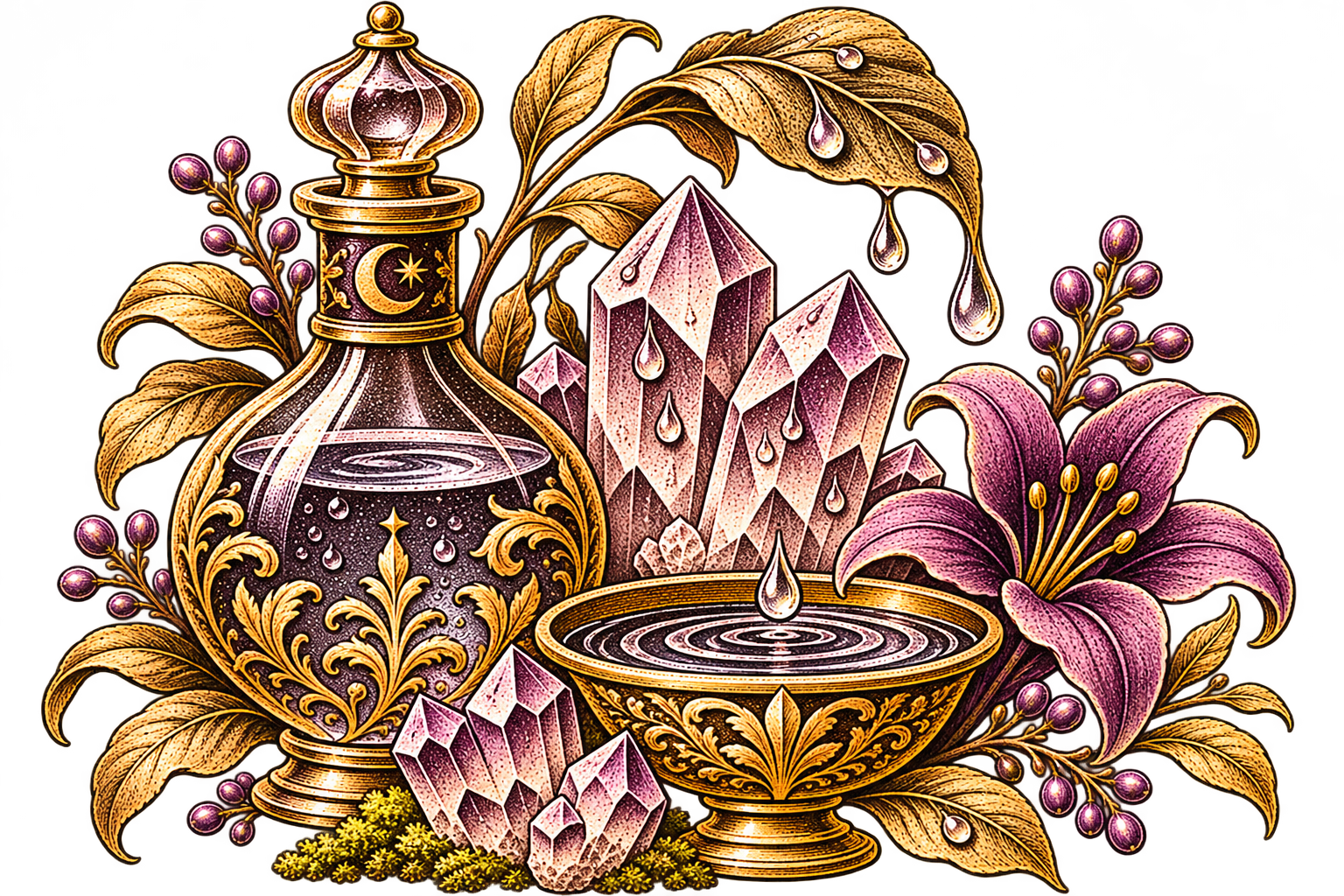
⟡ WATER & MOISTURE
When water is welcome — and when it isn't.
Not every crystal is suited to contact with water. While some minerals tolerate occasional moisture without issue, others can dissolve, deteriorate, become discoloured or lose their natural finish when exposed to water or prolonged humidity.
A mineral's appearance alone cannot always tell you how it will respond to moisture. Some specimens are naturally porous or contain delicate structures that can absorb water, while others may be affected by their chemical composition, surface treatments or existing fractures.
For this reason, we recommend avoiding unnecessary rinsing, soaking or submerging your crystals. Keep specimens away from damp environments, and always ensure your hands are dry when handling minerals that are particularly moisture-sensitive.
If you're unsure how a particular stone will respond, the safest approach is to keep it dry. A little caution can help preserve the natural appearance and condition of your collection.
CONSIDER
Solubility: Certain minerals can dissolve or deteriorate when exposed to water.
Porosity: Some stones absorb moisture, which may affect their appearance or structural integrity.
Chemical sensitivity: Certain minerals can react with moisture or oxygen, potentially causing discolouration or deterioration.
Treatments: Coatings, dyes, adhesives and other surface treatments may be affected by water.
Humidity: Prolonged exposure to damp conditions can be just as concerning as direct contact with water.
When in doubt, keep your crystals dry and consult the care guidance for the individual mineral.

⟡ LIGHT & HEAT
Sunlight, temperature and the elements.
Light and temperature can have a lasting effect on the appearance and condition of certain minerals. While some crystals tolerate everyday light without difficulty, others are more sensitive to prolonged exposure, particularly to direct sunlight and elevated temperatures.
Certain minerals can gradually fade or change colour when exposed to ultraviolet light over time. Amethyst, rose quartz and fluorite are among the specimens that may be vulnerable to colour fading, although sensitivity varies depending on the individual material and conditions of exposure.
Heat presents its own considerations. Sudden or significant temperature changes can cause some minerals to fracture, while prolonged exposure to high temperatures may alter their colour, structure or surface characteristics. Delicate specimens, treated stones and pieces with existing fractures may require particular care.
We recommend displaying light-sensitive crystals away from prolonged direct sunlight and keeping your collection in a stable environment, away from radiators, fireplaces and other sources of excessive heat.
CONSIDER
Sunlight: Prolonged exposure to direct sunlight can cause certain minerals to fade or change colour.
UV sensitivity: Amethyst, rose quartz and fluorite are examples of minerals that may be affected by extended light exposure.
Temperature changes: Sudden changes between hot and cold environments can place stress on some mineral structures and contribute to cracking.
Heat exposure: Avoid placing specimens near radiators, fireplaces, heating appliances or other sources of sustained heat.
Display locations: Windowsills may expose crystals to prolonged sunlight and temperature fluctuations, even when the surrounding room feels comfortable.
When in doubt, choose a cool, stable display location away from prolonged direct sunlight and excessive heat.
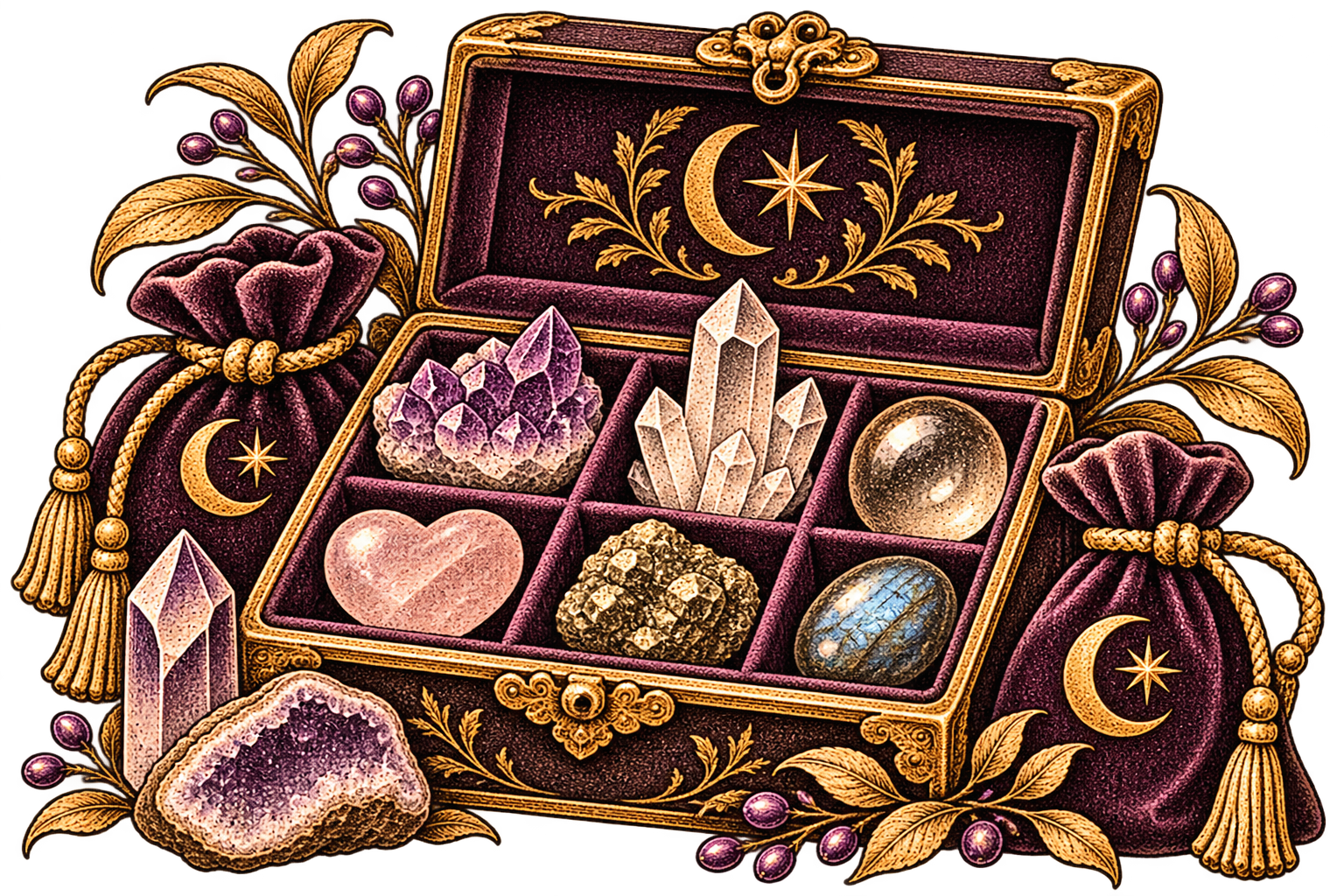
⟡ STORAGE
Keeping your treasures safe between rituals.
How a crystal is stored can be just as important as how it is handled. A thoughtfully arranged collection helps protect individual specimens from accidental damage, environmental changes and unnecessary wear over time.
Where possible, store crystals separately rather than allowing them to rest directly against one another. Minerals vary considerably in hardness, and a harder specimen can scratch the surface of a softer one. Points, thin edges, delicate carvings and natural formations may also be vulnerable to knocks or pressure when stored together.
Soft pouches, lined boxes and padded compartments can provide an additional layer of protection. Velvet, satin and other soft fabrics are useful for reducing surface contact, while individual compartments help prevent pieces from shifting or colliding.
Consider the environment in which your collection is kept, too. Choose a clean, dry location with a reasonably stable temperature, away from prolonged direct sunlight, excessive humidity and sources of heat.
A little organisation goes a long way towards preserving the natural character of your collection.
CONSIDER
Separation: Store individual specimens apart where possible, particularly when their hardness or physical characteristics differ.
Protection: Use soft pouches, padded boxes or lined compartments to help prevent scratches, chips and accidental knocks.
Delicate formations: Give clusters, points, thin edges and fragile carvings their own protected space.
Environment: Avoid damp areas, excessive humidity, direct sunlight and locations with significant temperature fluctuations.
Weight: Keep heavier specimens separate from smaller or more delicate pieces to prevent crushing or accidental damage.
Labelling: Keep mineral names and any relevant care information with your specimens, particularly when storing stones with different handling requirements.
The best storage is not necessarily elaborate; it simply gives each specimen the protection its natural characteristics require.
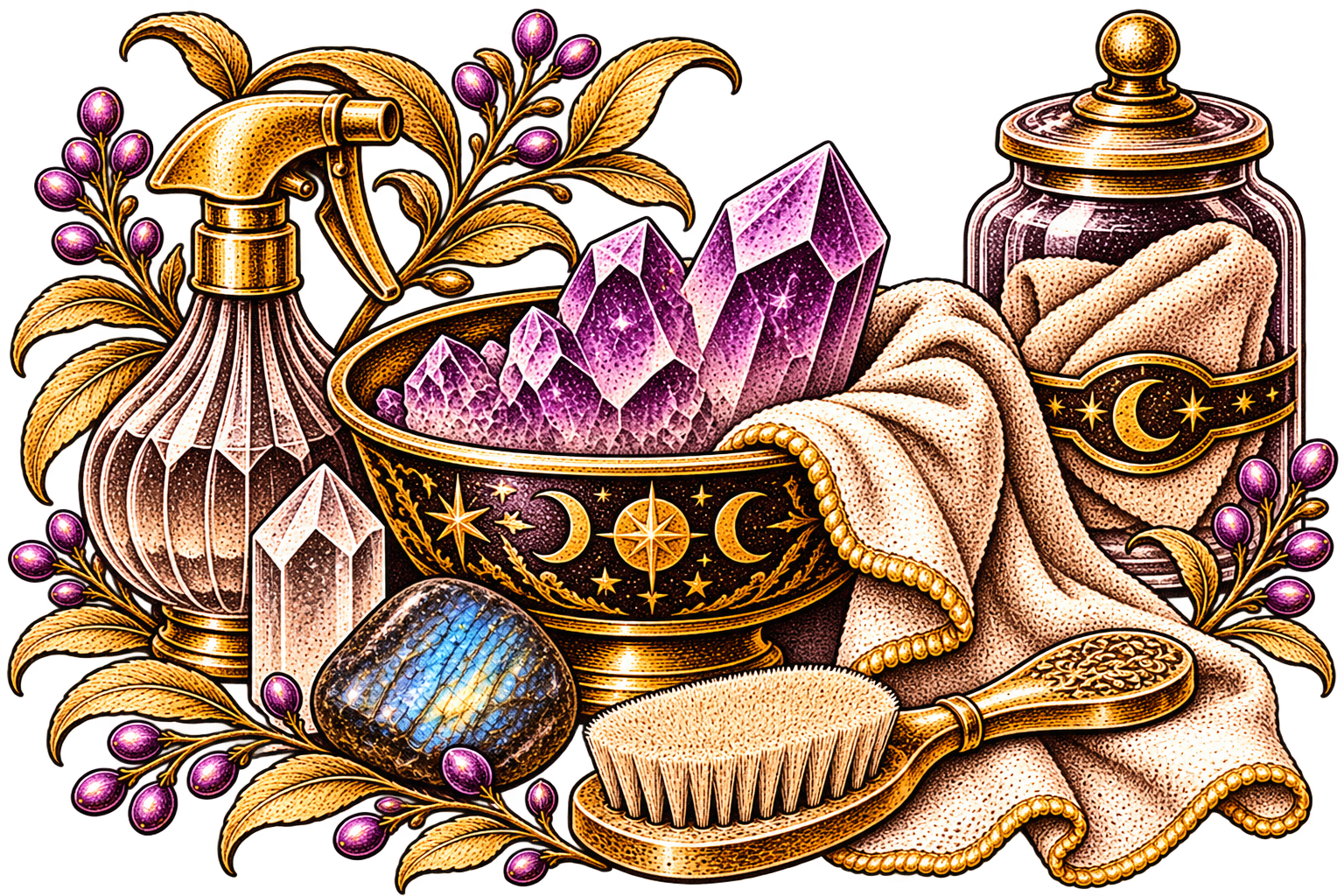
⟡ PHYSICAL CLEANING
Keeping specimens clean without causing harm.
Over time, crystals can collect dust, fingerprints and everyday surface residue, particularly when handled frequently or displayed in open spaces. Gentle physical cleaning can help maintain their natural appearance, but the method used should always take the individual mineral's characteristics into account.
For many durable specimens, a soft, dry microfibre cloth or a clean, soft-bristled brush is a good starting point. These can help lift loose dust without introducing unnecessary moisture or abrasive contact. Brushes can be particularly useful for reaching between crystal points and intricate formations, provided the bristles are gentle enough for the surface.
Not all surface marks are dirt, however. Natural inclusions, mineral deposits, variations in colour and small imperfections are part of what makes each specimen unique. Take a moment to distinguish between everyday dust and features that belong to the stone itself before attempting to remove anything.
Avoid assuming that every crystal can be wiped, rinsed or polished in the same way. Softer minerals, porous specimens, delicate formations and treated surfaces may be easily scratched or damaged by unsuitable cleaning materials. Even seemingly harmless household products can leave residues or alter a mineral's natural finish.
Always check the specific care requirements of a specimen before cleaning it. When uncertain, begin with the gentlest dry method, work slowly and avoid applying unnecessary pressure. The aim is to preserve a crystal's natural character and condition, not to make every specimen look perfectly polished.
CONSIDER
Soft cloths: Use clean, lint-free microfibre cloths for suitable, durable surfaces. Avoid rough fabrics that may cause scratches.
Soft brushes: A clean, soft-bristled brush can help remove loose dust from intricate formations and hard-to-reach areas.
Abrasives: Avoid abrasive sponges, scouring pads, polishing compounds and rough materials that may scratch or wear down a specimen.
Cleaning products: Household cleaners, detergents, alcohol and chemical solutions may damage certain minerals, finishes or treatments.
Moisture: Do not assume a specimen can safely be wiped with a damp cloth. Check its water sensitivity first.
Pressure: Avoid scrubbing, scraping or applying force, particularly around delicate points, natural fractures and softer surfaces.
Ultrasonic cleaning: Is generally not recommended for most minerals, due to the tiny vibrations caused and the fragility of the crystal.
The gentlest suitable method is often the best. Preserving a crystal's natural surface is always preferable to risking damage in pursuit of a perfect finish.

⟡ KNOW YOUR STONE
Because every mineral has its own nature.
No two minerals are quite alike. Each has its own physical characteristics, natural variations and sensitivities, shaped by the conditions in which it formed. Understanding these differences is an important part of caring for any crystal collection.
A stone's name is only the beginning. Its mineral composition, hardness, cleavage, structure and any known treatments can all influence how it should be handled, cleaned, displayed and stored. Even specimens of the same mineral may differ in appearance and care requirements depending on their formation and condition.
Learning to recognise these characteristics helps us make more informed decisions about the way we care for our specimens. Understanding the difference between hardness and toughness, recognising natural fractures and knowing which minerals are sensitive to moisture or light can help prevent avoidable damage.
This is why we encourage taking the time to learn about each individual piece rather than relying on general care rules. A method that is perfectly suitable for one mineral may be damaging to another, and what works for a polished carving may not be appropriate for a delicate natural formation.
Throughout Veil & Hex, we believe that appreciation begins with understanding. Knowing what a crystal is, how it formed and what makes it unique allows us to care for it with greater consideration. It also gives us a deeper appreciation of the remarkable natural processes behind every specimen.
The more we learn about the stones we keep, the better equipped we are to preserve their natural character for years to come.
CONSIDER
Identification: Mineral names and trade names are not always interchangeable. Understanding what a specimen actually is can help you find accurate information about its properties and care.
Hardness: The Mohs scale provides a useful indication of a mineral's resistance to scratching, although it does not measure its overall toughness or resistance to breaking.
Composition: A mineral's chemical composition can influence how it responds to moisture, light, heat and other environmental conditions.
Structure: Cleavage, fractures, natural formations and internal characteristics can all affect how a specimen should be handled.
Treatments: Dyed, coated, stabilised or otherwise treated materials may have different care requirements from their untreated counterparts. Knowing whether a specimen has been treated is important.
Individual variation: Natural specimens can vary considerably, even within the same mineral family. Always consider the characteristics of the individual piece rather than assuming every example will behave identically.
The more you understand your stone, the better equipped you are to preserve it.

the crystal codex
A deeper understanding of the mineral world.
Explore the identities, properties, origins and correspondences of the stones within our collection.